
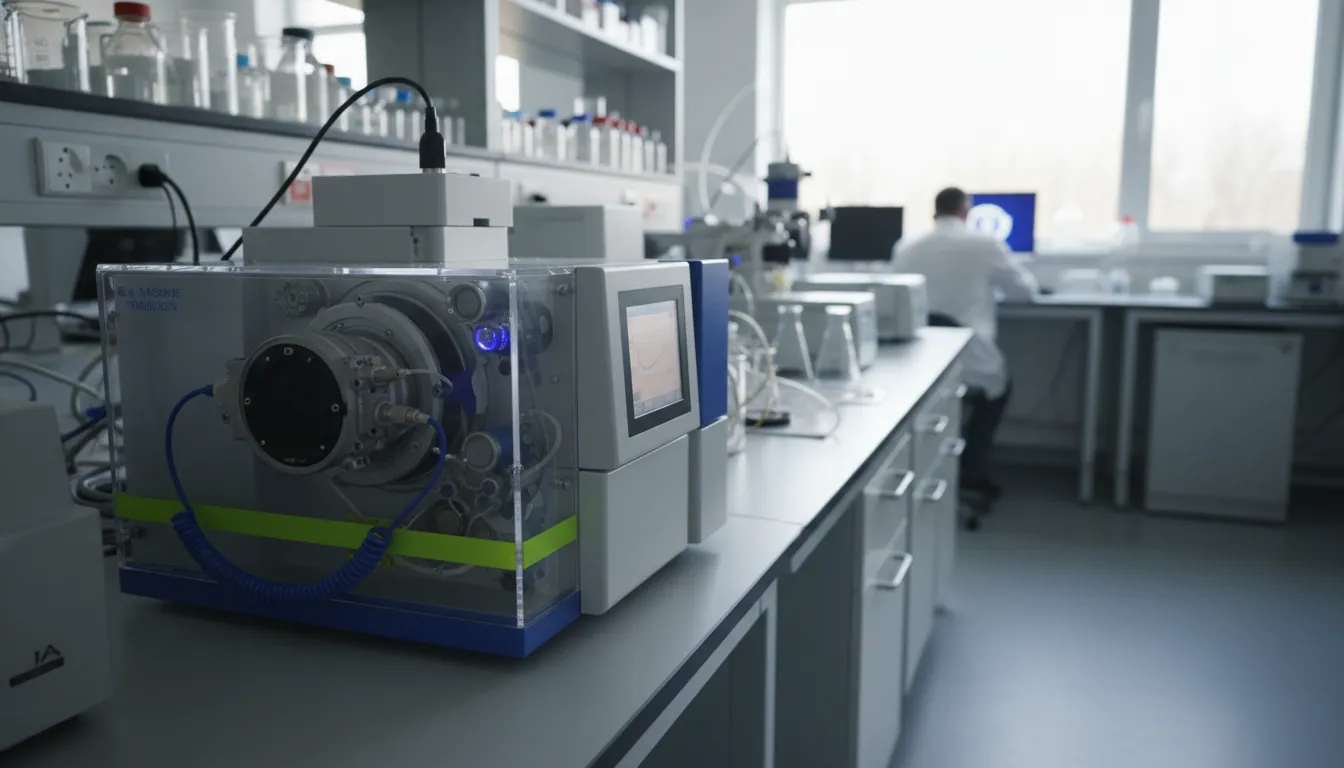
 AI-generated from publicly available materials.
Danaher’s recent upgrades to its SCIEX mass spectrometry platform signal a strategic move towards enhancing its market position in life sciences through AI integration.
SCIEX, a subsidiary of Danaher, has introduced significant enhancements to its ZenoTOF line and launched the novus V55 triple quadrupole mass spectrometer, both powered by the new AI-enabled SCIEX OS 5.0 software. These advancements aim to optimize complex laboratory workflows and improve sensitivity, thereby bolstering Danaher's role in the data-intensive life sciences sector. The integration of hardware and software is expected to create sustained revenue streams from consumables and service contracts.
The novus V55 system is particularly noteworthy as it could deepen Danaher’s customer base for advanced instruments, potentially leading to increased sales of consumables. However, investors should remain cautious, as the company faces challenges from rising R&D costs and market pressures that could impact profit margins if adoption rates do not meet expectations.
Looking ahead, Danaher projects significant revenue growth, aiming for $29.3 billion by 2029. This ambition relies heavily on the successful adoption of new technologies and a shift towards higher-margin recurring revenues. The market's response to these innovations will be crucial, especially in light of potential economic pressures in sectors like early-stage biotech.
In summary, while Danaher’s advancements in AI-enabled mass spectrometry may strengthen its market position, investors should monitor the broader economic landscape and its implications for the company's growth trajectory. The focus on creating integrated systems that reduce reliance on one-time capital expenditures could be a pivotal strategy in navigating future challenges.