
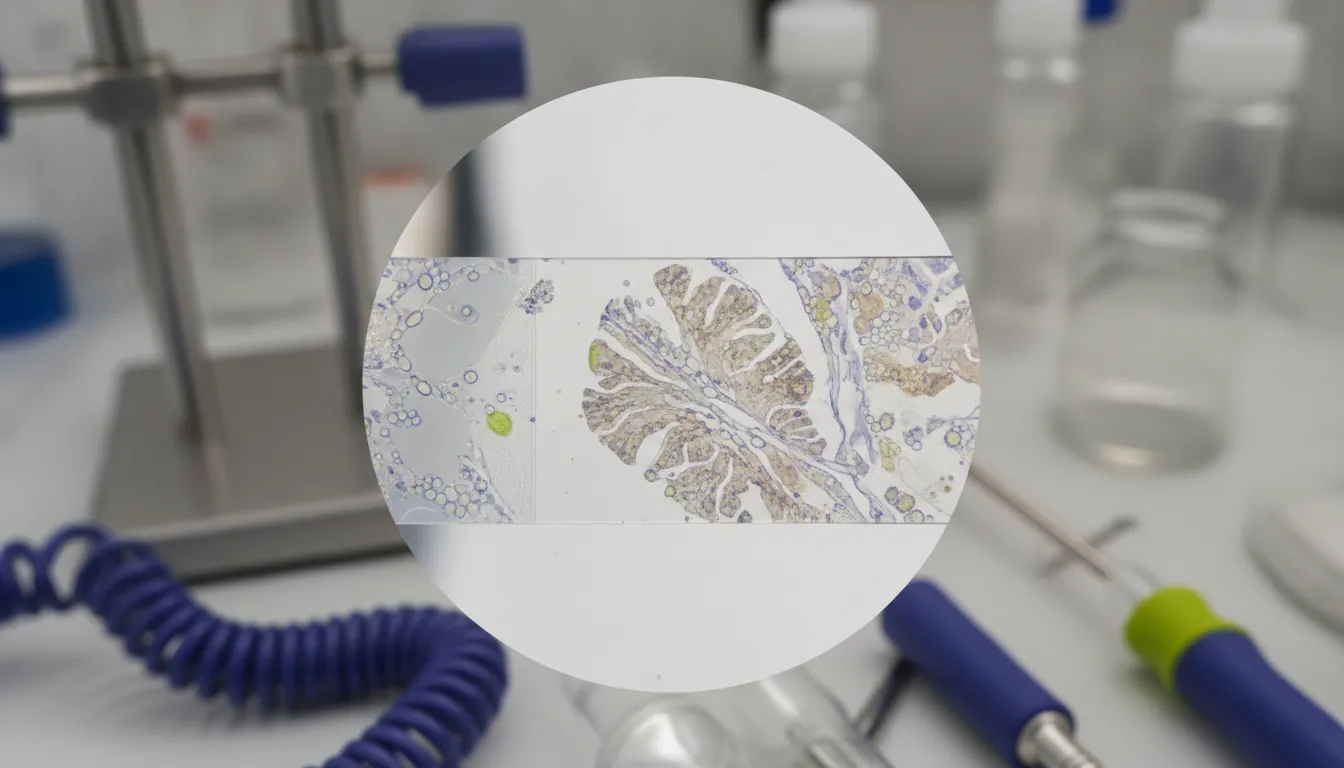
 AI-generated from publicly available materials.
Recent advancements in spatial transcriptomics are enabling researchers to better understand the relationship between tumor organization and treatment response, particularly in cancer therapy.
Researchers at the University of Chicago have developed a framework for comparing spatial transcriptomics data across various tumor types, as detailed in their study published in *Cell Reports Medicine*. By analyzing data from 262 solid tumors, they identified recurring multicellular regions, termed "spatial groups," which represent distinct biological domains within the tumor microenvironment (TME). This innovative approach allows for a more structured comparison of tumors, addressing the challenge of heterogeneous tumor microenvironments.
The study revealed that the primary factor differentiating tumors was the spatial heterogeneity of immune biology. Notably, in a small cohort of patients with non-small cell lung cancer treated with immune checkpoint inhibitors, the classification of tumors into spatial groups was able to distinguish between clinical responders and nonresponders. This suggests that these spatial groups may play a crucial role in linking tumor structure to biological function and therapeutic outcomes.
Arjun Raman, the study's senior author, emphasized the potential of this method to enhance precision oncology by enabling clinicians to compare newly profiled tumors against existing data on treatment responses. While the findings are preliminary, they indicate that spatial transcriptomics could evolve into a valuable tool for not only mapping tumors but also for guiding therapeutic strategies based on spatial organization.