
 AI-generated from publicly available materials.
This week in European HealthTech saw significant developments, including a major investment in surgical robotics, advancements in AI certification, and notable funding rounds across the sector.
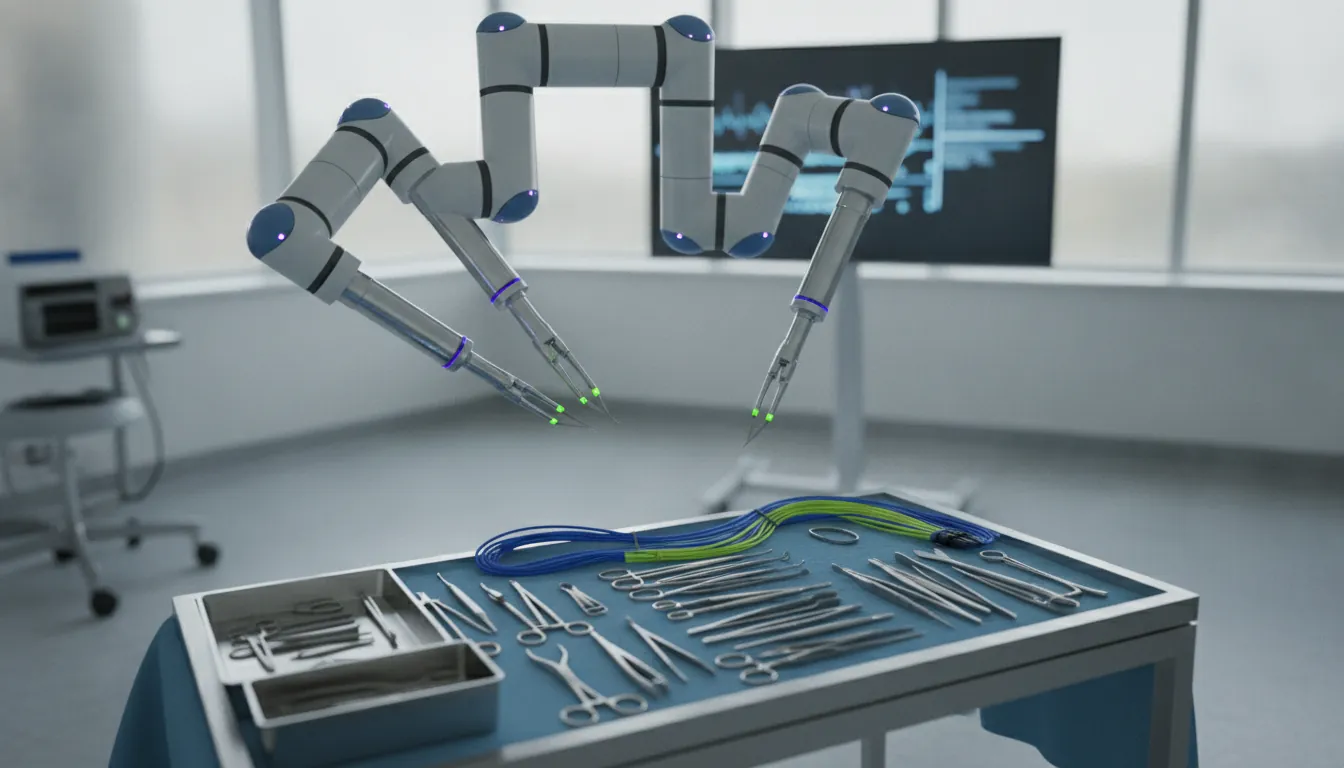
Stryker announced a strategic partnership with CMR Surgical, committing around $400 million to gain exclusive sales rights for the Versius robotic surgery system in the U.S. This investment not only secures a pivotal role in the surgical robotics market but also allows CMR to maintain its development efforts outside the U.S. Meanwhile, Scarlet, a certification body for AI medical devices, raised $50 million to enhance its operational capabilities and expand into the U.S. and Asia-Pacific markets. In Sweden, Yazen Health secured €50 million to expand its digital weight-loss services, reflecting a growing trend in tech-driven health solutions.
Despite these advancements, the broader European health tech landscape is facing challenges. A recent report highlighted that investments in Series B healthcare rounds have plummeted by approximately 84% since 2021, indicating a tightening liquidity environment. This trend raises concerns about the sustainability of funding for health tech innovations, particularly in the UK, which has dominated recent funding activity.
On the regulatory front, WHO/Europe emphasized the urgent need for governance in AI applications within healthcare, noting that many countries are deploying AI without adequate regulatory frameworks. As the EU progresses with its AI Act, timelines for compliance have shifted, emphasizing the importance of establishing robust governance structures to build public trust in AI technologies. These developments underscore the critical intersection of innovation and regulation in shaping the future of health tech in Europe.