
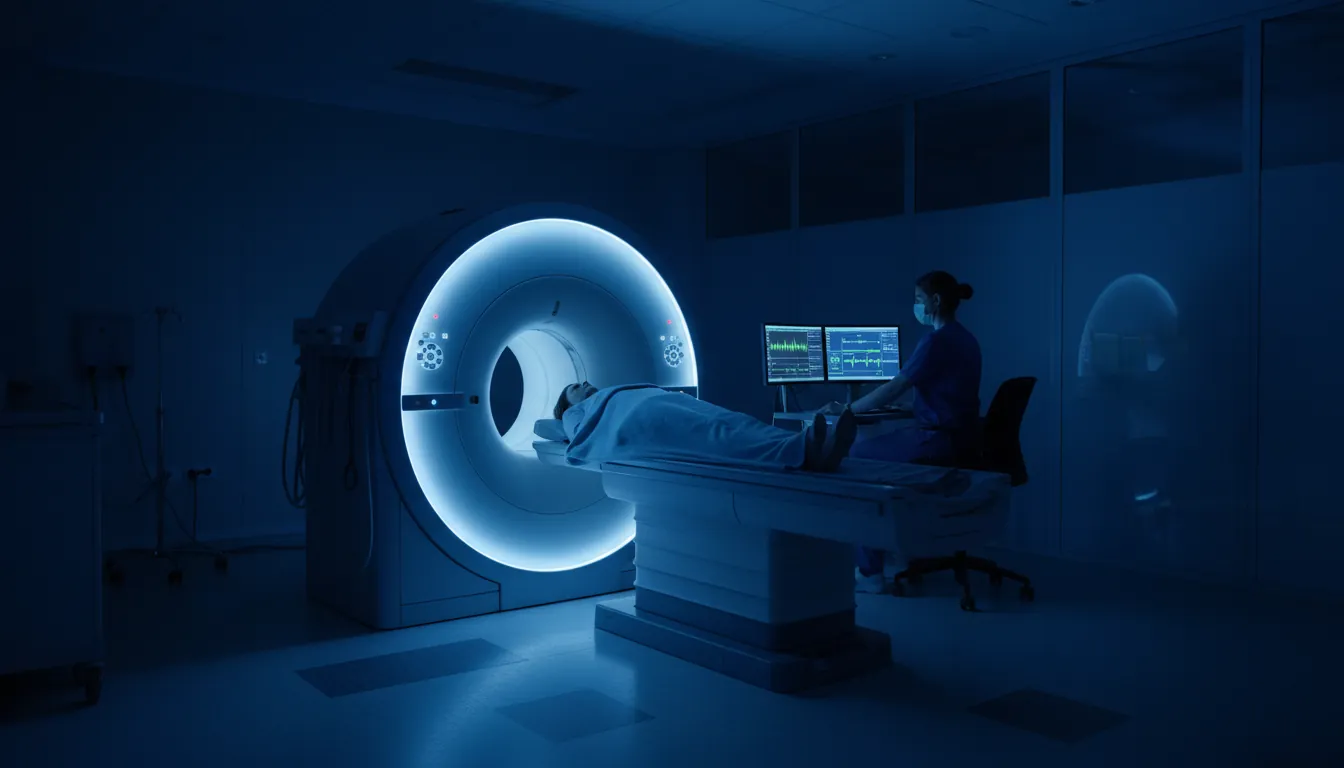
 AI-generated from publicly available materials.
The medical imaging market is experiencing significant growth, driven by advancements in AI-powered diagnostics and increasing healthcare investments.
The integration of artificial intelligence into medical imaging is revolutionizing the field, enhancing diagnostic accuracy and improving patient outcomes. A recent report indicates that the global medical imaging market, valued at approximately USD 42.6 billion in 2024, is projected to grow to USD 70.16 billion by 2033, reflecting a compound annual growth rate (CAGR) of 5.7% from 2026 to 2033. This growth is largely attributed to the rising prevalence of chronic diseases, technological innovations in imaging systems, and increased healthcare spending.
Key drivers of this market include the growing incidence of conditions such as cancer and cardiovascular diseases, which necessitate advanced imaging for early detection and continuous monitoring. Additionally, advancements in imaging technologies—such as 3D imaging and hybrid systems—are enhancing diagnostic precision. North America currently leads the market, bolstered by robust healthcare infrastructure and high investment levels, while the Asia-Pacific region is emerging as the fastest-growing market due to expanding access to healthcare services.
However, challenges remain, including the high costs of advanced imaging equipment and a shortage of skilled professionals to operate these systems. As the market evolves, addressing these issues will be crucial for sustaining growth and improving healthcare delivery globally.