
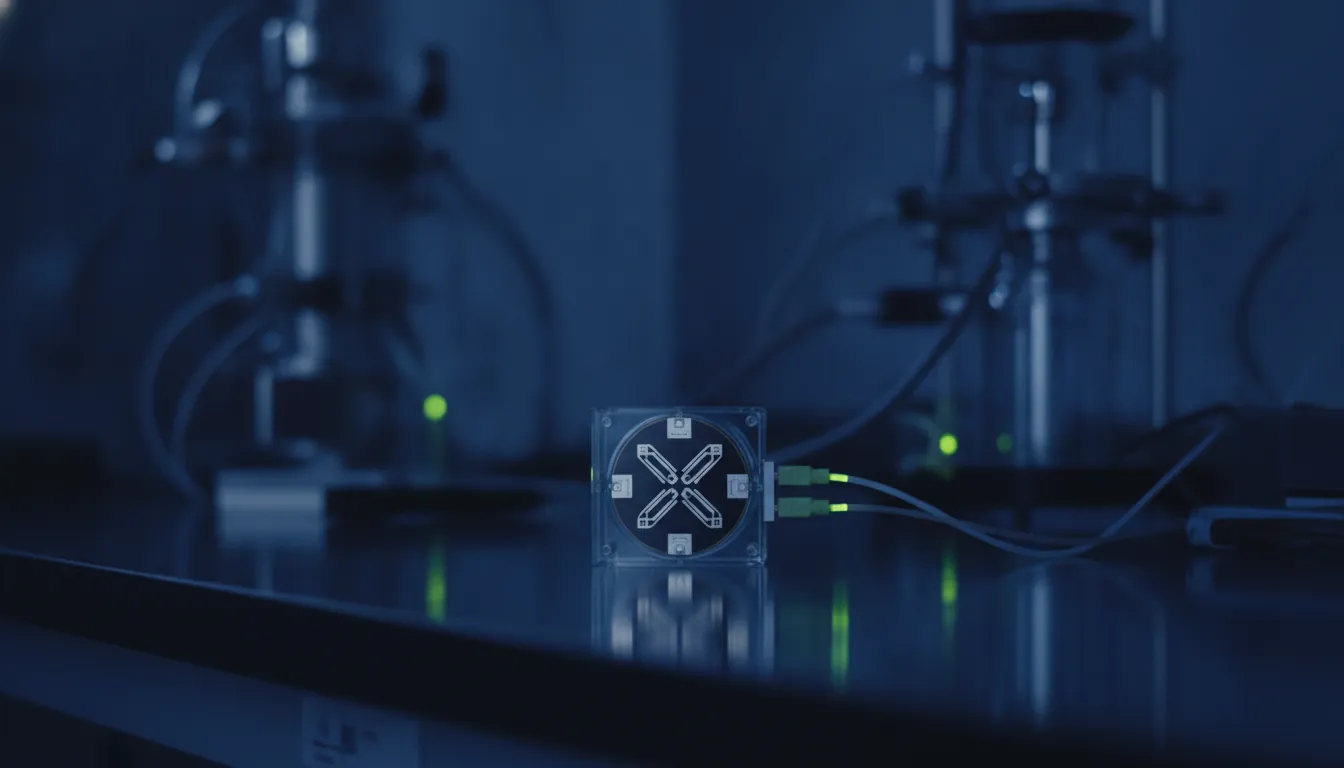
 AI-generated from publicly available materials.
Recent advancements in AI are significantly enhancing the efficiency of quantum computing experiments, as demonstrated by Beatriz Yankelevich's innovative use of GPT-5.6 Sol in her research at MIT.
Quantum computing leverages the unique properties of quantum mechanics to process information through quantum bits, or qubits. The preparation and execution of experiments involving qubits can be lengthy and complex, often requiring extensive preliminary measurements. Yankelevich utilized GPT-5.6 Sol, integrated with Codex, to streamline her experimental workflow in the Engineering Quantum Systems Group. This integration allowed the AI to autonomously conduct routine measurements, analyze results, and determine subsequent actions, significantly reducing the need for constant oversight.
In her experiments with superconducting qubits, Yankelevich found that GPT-5.6 Sol could effectively manage the calibration process, which involves a series of interdependent measurements. The AI was able to autonomously identify key parameters and complete standard measurement sequences, although it struggled with weak or noisy signals, indicating a need for human intervention in complex scenarios. This capability highlights the potential for AI to transform how researchers approach data collection and analysis in quantum experiments.
The implications of this research are profound, as it not only enhances productivity but also allows researchers to dedicate more time to higher-level tasks such as data interpretation and experimental design. As AI continues to evolve, its role in aiding scientific research could lead to accelerated advancements in quantum computing and beyond, enabling more complex and innovative experiments in the field.