
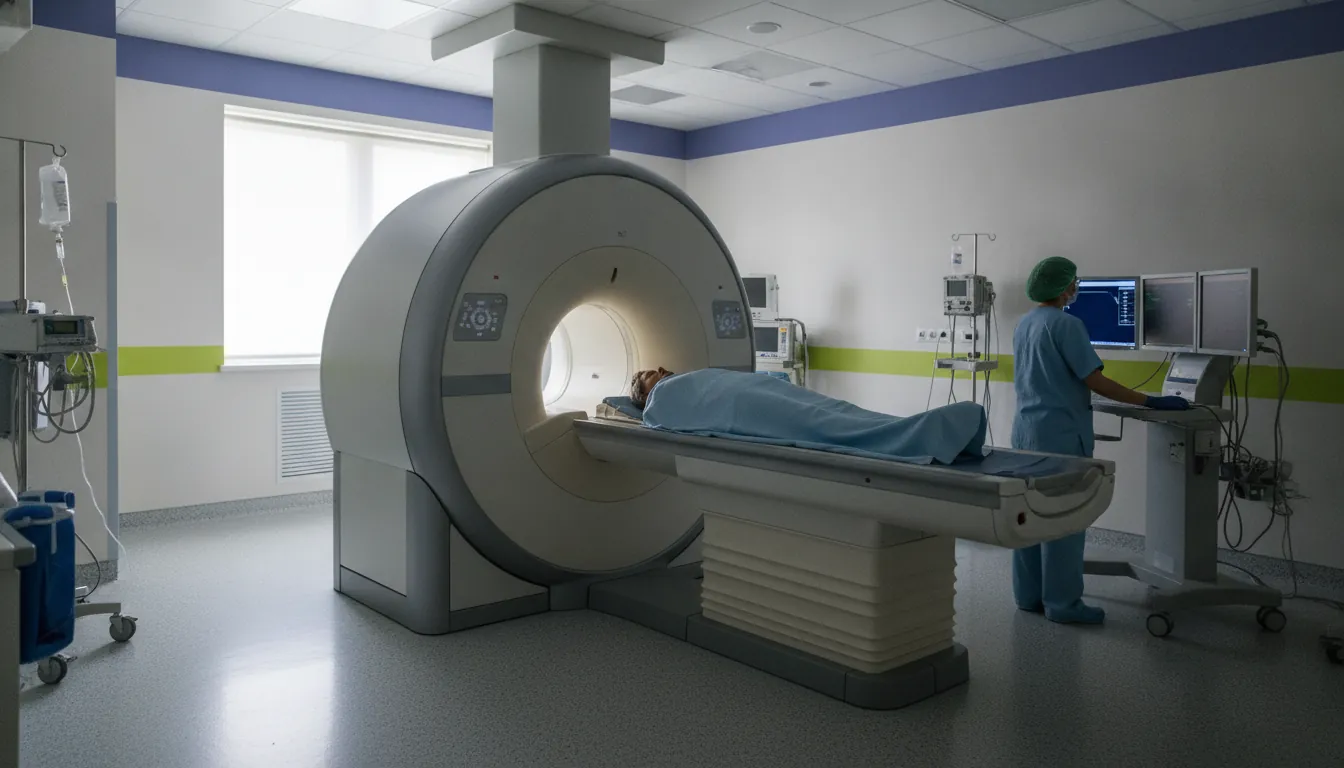
 AI-generated from publicly available materials.
The AI-powered imaging diagnostics market is projected to grow significantly, reaching an estimated US$9.73 billion by 2033, with a compound annual growth rate (CAGR) of 22.3% from 2025 to 2033. This growth reflects a shift from pilot projects to operational frameworks in hospitals, where AI technologies are increasingly utilized for urgent scan triage and improved diagnostic workflows across various imaging modalities.
Recent developments highlight the rapid advancement of AI in imaging diagnostics. Notable FDA clearances include Qure.ai's expansion of its qXR-Detect platform, Philips' introduction of the Spectral CT Verida, and the integration of various AI tools aimed at enhancing radiology workflows. These innovations underscore the sector's transition toward more regulated and deployable AI solutions that can integrate seamlessly into existing healthcare infrastructures.
The driving force behind this market expansion is the increasing demand for imaging services amid a shortage of radiologists. As healthcare systems grapple with rising patient volumes, AI tools are being evaluated for their potential to enhance workflow efficiency and diagnostic accuracy, particularly in identifying critical conditions such as strokes and pulmonary embolisms. This positions AI as a supportive element in clinical decision-making rather than a replacement for human expertise.
Despite the promising outlook, challenges such as interoperability, regulatory compliance, and clinician trust remain significant barriers to widespread adoption. As the market evolves, stakeholders are focusing on the need for robust evaluation and governance frameworks to ensure the safe and effective integration of AI technologies in clinical settings. The future of imaging diagnostics will likely hinge on the ability to balance innovation with regulatory oversight, paving the way for a more efficient healthcare delivery system.