Quality, Compliance & Regulatory - software & AI news

Daily news on software, AI, and companies shaping quality, compliance & regulatory.

Showing 124 results
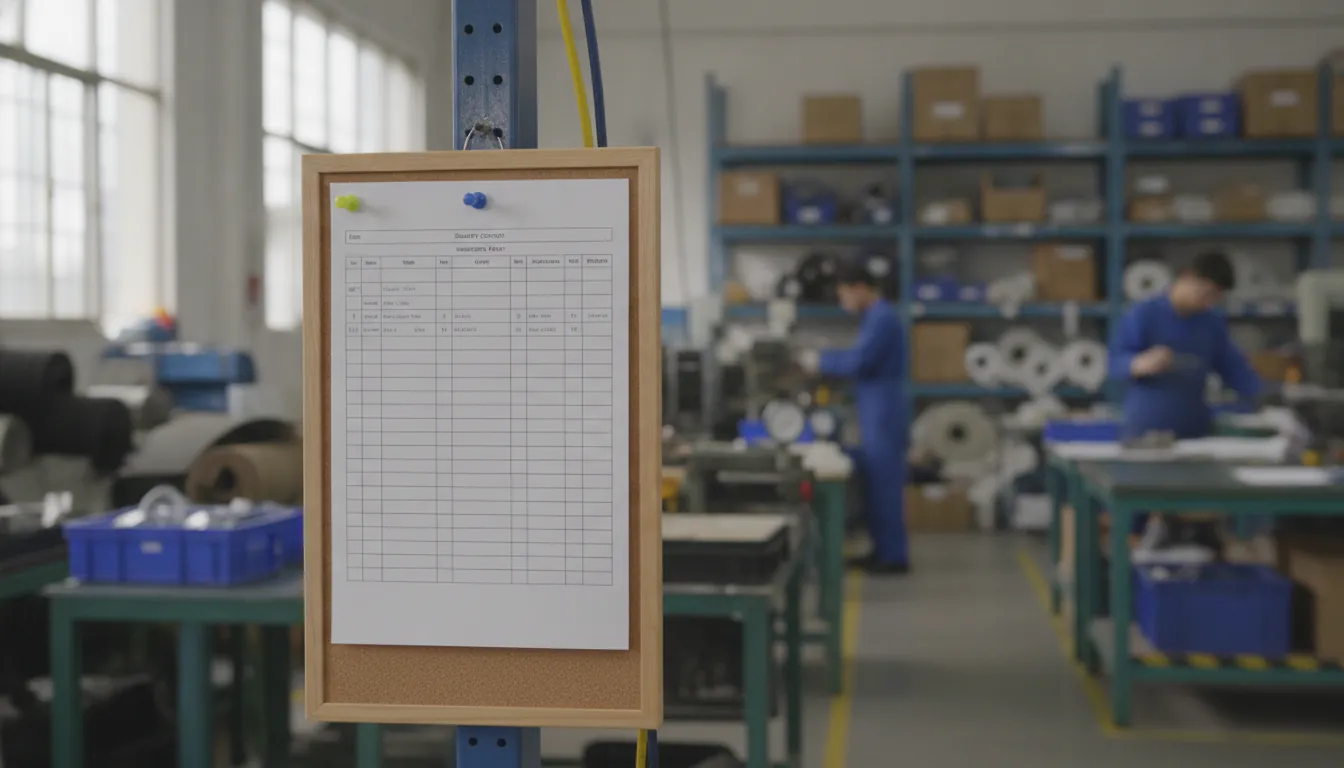
Quality control checklist in a manufacturing workspace

Jun 16, 2026

Catalent Debuts AI Tool for Quality Management

Catalent Inc. has introduced Qai, an innovative AI tool aimed at enhancing quality management processes within its operations.The launch of Qai marks a significant step for Catalent, a global contract development and manufacturing organization (CDMO), as it integrates AI into its quality management systems. This enterprise-level solution is designed to improve processes related to deviations and complaints by utilizing Catalent’s extensive data for quicker analysis and effective root cause ident

Minimalist illustration of smart glasses and VR headset

Jun 15, 2026

AutoVRse raises $2.4M from Singularity AMC and Lumikai to scale AI transformation for global Pharma and MedTech

AutoVRse, an emerging player in the industrial AI transformation sector, has successfully secured $2.4 million in funding, co-led by Singularity AMC and existing investor Lumikai. This funding aims to enhance AI-driven training solutions for the pharmaceutical and MedTech industries.AutoVRse specializes in VR-based training and smart-glasses technology, catering to over 500,000 users across more than 50 enterprise clients globally, including major pharmaceutical companies and medical device manu
Researcher reviewing AI outputs in a regulatory setting

Jun 11, 2026

Euro Roundup: EMA researchers share regulatory research priorities for AI across the lifecycle

Researchers from the European Medicines Agency (EMA) have outlined key regulatory research priorities for artificial intelligence (AI) throughout the lifecycle of medicines, emphasizing the importance of accuracy and reliability in AI tools.The EMA's recent preprint paper is based on a survey involving 273 stakeholders, including regulators, industry professionals, and patients. The findings highlight that ensuring the trustworthiness of AI-generated outputs is paramount, particularly as these o
A validation document on a laboratory table in a dimly lit setting.

Jun 11, 2026

Why Validation is Becoming the Proving Ground for AI in Life Sciences

The integration of AI in life sciences is increasingly focused on computer system validation (CSV), a critical area for ensuring compliance and operational efficiency.Despite the widespread adoption of generative AI across various sectors, its tangible business impact remains limited, particularly in the highly regulated life sciences industry. A McKinsey study reveals that while 80% of companies employ generative AI in some capacity, only 40% report a significant impact on earnings before inter
A minimalist illustration of a pill representing pharmaceutical workflows.

Jun 7, 2026

Collate Raises $95 Million Series A To Expand AI Platform For Regulated Life Sciences Workflows

Collate has successfully secured $95 million in a Series A funding round to enhance its AI platform tailored for regulated workflows in the life sciences sector.The investment, led by prominent firms including Redpoint Ventures and Y Combinator, aims to bolster Collate's mission of providing reliable, patient-centric AI solutions for pharmaceutical and life sciences organizations. Founded by CEO Surbhi Sarna, Collate specializes in GxP-compliant software that automates and optimizes workflows wi
A pill bottle and regulatory documents in a dimly lit office

Jun 5, 2026

Pharma compliance adapts to AI and regulation

The landscape of pharmaceutical compliance is undergoing significant transformation as industry leaders adapt to rapid regulatory changes and emerging technologies.During a recent webinar hosted by the Pharmaceutical Compliance Congress, experts highlighted the mounting challenges compliance teams face in an evolving environment. Tim Stow, global head of ethics and compliance at Galderma, noted the dual pressures of adapting to new regulations while managing traditional compliance responsibiliti
Flat illustration of an in vitro diagnostic device and a regulatory document

Jun 5, 2026

Euro Roundup: MedTech Europe welcomes IVDR proposals, calls for strengthening of some changes

MedTech Europe has expressed strong support for proposed changes to the In Vitro Diagnostic Regulation (IVDR), advocating for enhancements in specific areas to optimize regulatory processes.The trade group categorized the proposed IVDR changes into “welcome” and “strengthen” categories, indicating a positive reception overall. A key highlight is the European Commission's initiative for proportionate oversight of low-risk devices, which MedTech Europe views as a necessary adjustment to current re
Silhouette of a document with a checkmark representing regulatory compliance

Jun 2, 2026

Pharma in Focus: The Regulatory Issues Everyone is Talking About

The increasing scrutiny of artificial intelligence (AI) by the FDA is prompting life science companies to enhance their regulatory compliance and quality oversight for AI tools in manufacturing. The inaugural session of "Pharma in Focus: The Regulatory Issues Everyone is Talking About" will delve into these challenges, centering around a case study of the FDA Warning Letter issued to Purolea, which highlights critical regulatory expectations.During this session, experts will discuss how the FDA'
A laboratory workspace with labeling materials scattered on a table, illustrating the process of artwork and labeling in life sciences.

Jun 2, 2026

AI and Automation in Artwork & Labelling for Life Sciences: Advancing Quality and Efficiency, Upcoming Webinar Hosted by Xtalks

A forthcoming webinar will delve into how AI and automation are transforming labeling and artwork processes in the life sciences sector, aiming to enhance quality and efficiency.The event will explore the persistent issue of labeling errors, a significant contributor to pharmaceutical recalls. As regulatory demands intensify, the focus is shifting from merely identifying errors to preventing them earlier in the workflow. Featured speakers will discuss implementing AI-driven quality checks that o
A close-up of an AI algorithm on transparent film in a dimly lit lab setting.

Jun 2, 2026

If Your AI Can’t Explain Itself, Can FDA Authorize It?

Algorithmic transparency is becoming crucial for FDA evaluations of AI/ML medical devices, as manufacturers face challenges in explaining their models despite high performance metrics.As AI-powered diagnostic tools gain traction, the FDA is emphasizing the importance of understanding how these algorithms function rather than solely focusing on performance metrics like sensitivity. Manufacturers are increasingly receiving deficiency letters not for underperformance, but for failing to elucidate t
Vapor cloud in a pharmaceutical manufacturing facility

Jun 1, 2026

Is Veeva Systems (VEEV) Quietly Rewiring Pharma Workflows Into a Deeper Enterprise Cloud Moat?

Veeva Systems is making significant strides in integrating its cloud and AI solutions into the workflows of life sciences companies, as evidenced by recent partnerships with Kindeva Drug Delivery, Merck KGaA, and Teva Pharmaceuticals. These collaborations aim to enhance quality and commercial operations across various sectors, including manufacturing and research.The recent adoption of Veeva Quality Cloud by Kindeva exemplifies how Veeva is solidifying its role in the life sciences ecosystem. Th
A desk with regulatory documents and a medical device in a dimly lit office.

May 30, 2026

Tata Elxsi and OpenAna Unveil Anatel™, An AI‑Native Platform Redefining Regulatory‑Ready MedTech Software Engineering

Tata Elxsi and OpenAna have introduced AnaTel™, an innovative AI-native platform aimed at transforming regulatory-ready software engineering in the MedTech sector.This platform was unveiled at DeviceTalks Boston 2026 and is designed to streamline compliance processes while significantly reducing the development timelines for Software as a Medical Device (SaMD). By leveraging autonomous AI agents, AnaTel™ can cut development cycles from eight weeks to just 72 hours, potentially increasing product