
Here's what visitors see about you right now.
Your profile on Life Sciences Digital — and the pages for each of your products — were compiled from publicly available materials. We take care to get it right, but nobody knows Open Systems Pharmacology the way you do, and some of what visitors read today may be out of date or wrong. Claiming the profile lets you correct it directly.
Company description
Open Systems Pharmacology (OSP) develops and distributes free, open-source modeling and simulation software for pharmaceutical and life sciences applications. Its primary tools, PK-Sim® and MoBi®, support physiologically based pharmacokinetic (PBPK) modeling, PBPK/pharmacodynamic (PD) modeling, and quantitative systems pharmacology (QSP). The platform is used by academia, regulatory agencies, and industry, and is available at no cost to all users.
The OSP Suite is designed to allow users to build complex models without starting from scratch, offering flexibility across PBPK, PBPK/PD, and QSP workflows. The community is supported through a public forum, extensive documentation including manuals and qualification documents, and a growing library of tutorials and published models.
Core Software Tools
- PK-Sim®: A tool for building and running PBPK models, supporting workflows such as parameter optimization based on observed pharmacokinetic data, pediatric modeling, drug-drug interaction modeling, and population simulations.
- MoBi®: Used alongside PK-Sim® for more detailed model construction and customization, including modularization of PBPK-QSP models and advanced simulation building block management.
- OSP Suite: The combined software package encompassing both tools, currently available as Version 12 Update 2.
Key Modeling Capabilities
- PBPK model building and parameter optimization based on observed PK and mass balance data following intravenous and oral administration
- Pediatric PBPK modeling, including building individual and population models for children and comparing results to adult models
- PBPK/PD model development, covering fundamental concepts and practical implementation within standard modeling workflows
- Fully mechanistic drug-drug interaction modeling
- QSP modeling, including systems pharmacology PD models such as a glucose-insulin model relevant to diabetes research
- Simulation in R following best practices, in addition to the desktop GUI tools
- Advanced features including parameter favorites for efficient navigation, chart customization with reusable templates, and comparison of simulations and building blocks
Learning Resources and Community
- A library of tutorials covering topics from basic PBPK model construction to advanced workflows, using real compounds such as morphine and ciprofloxacin as examples
- Online courses provided by esqLABS, featuring over 30 real-world examples in PK-Sim® and MoBi®, with free access for academia
- A community forum for questions, answers, and updates
- A growing database of scientific journal publications related to OSP or describing work performed with PK-Sim® and MoBi®, open for community contributions
- A published model library, including models such as the Glucose Insulin Model coupling PBPK models of glucose, insulin, and glucagon with both non-mechanistic PD and systems pharmacology PD approaches
- An OSP Community Conference, with the next edition scheduled for September 24–25, 2026, in Beerse, Antwerp
Management and Organizational Affiliations
- The OSP management team includes representatives from major pharmaceutical companies and academic institutions, including Sanofi, Boehringer Ingelheim, Novartis, Bayer AG, Uppsala University, Pharmetheus, esqLABS GmbH, and Design2Code Inc.
- Key team members include Donato Teutonico (Sanofi), Erik Sjögren (Pharmetheus and Uppsala University), Ibrahim Ince (Boehringer Ingelheim), Jan Schlender (Novartis), Jörg Lippert (Bayer AG), Juri Solodenko (Bayer AG), Michael Sevestre (Design2Code Inc.), Rolf Burghaus (Bayer AG), Ronald Niebecker (Boehringer Ingelheim), and Stephan Schaller (esqLABS GmbH)
The OSP Suite is freely available for download, and the project maintains an active community through its forum, newsletter, documentation portal, and conference events.
AI-generated · replace with your own
Every part of your profile.
Your company page and every software page attached to it. Nothing is held back — a premium profile includes all of it.
Accuracy
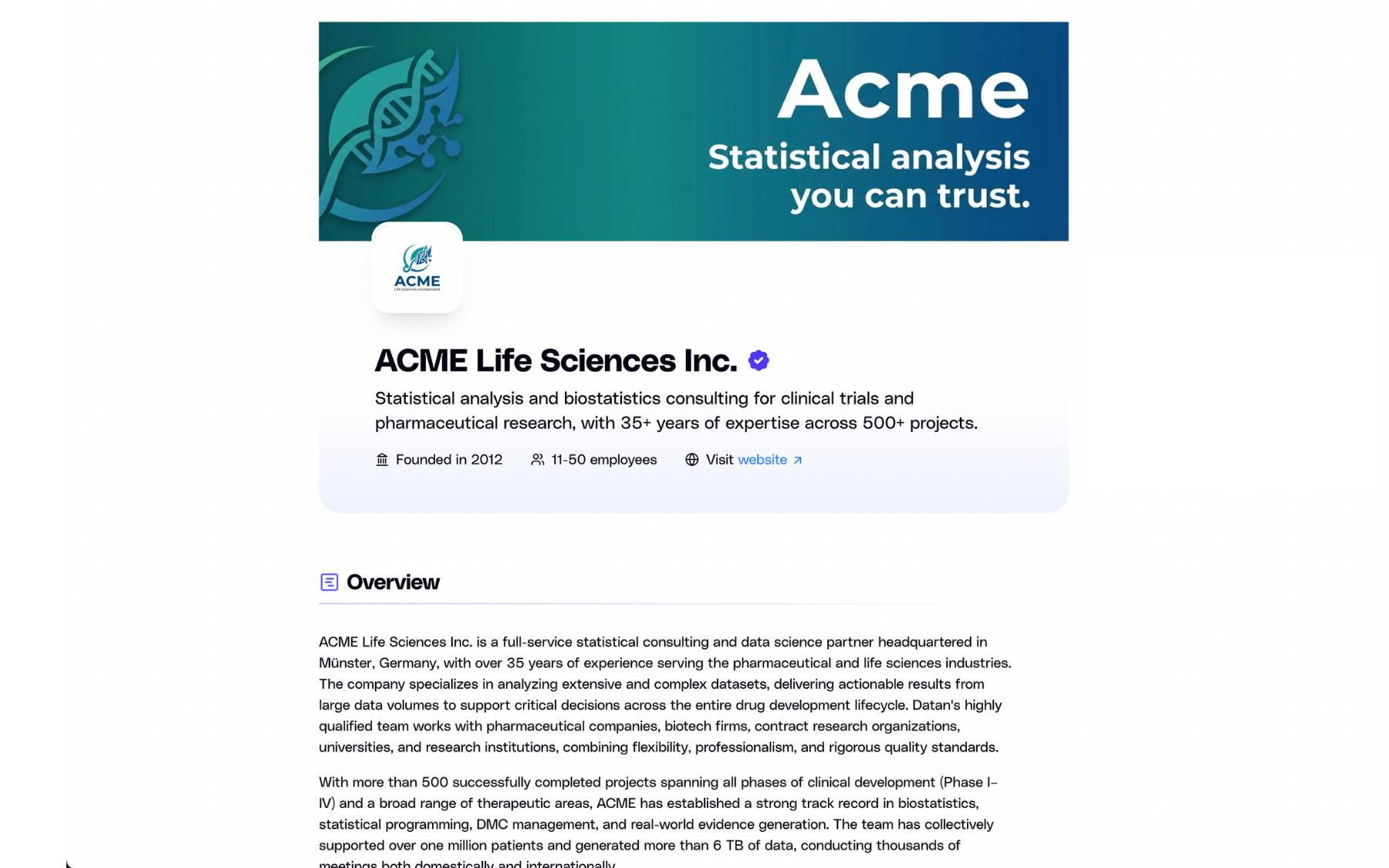
Your own descriptions
Replace the AI-generated summary with your own words — for your company and for every product you list.
Discovery
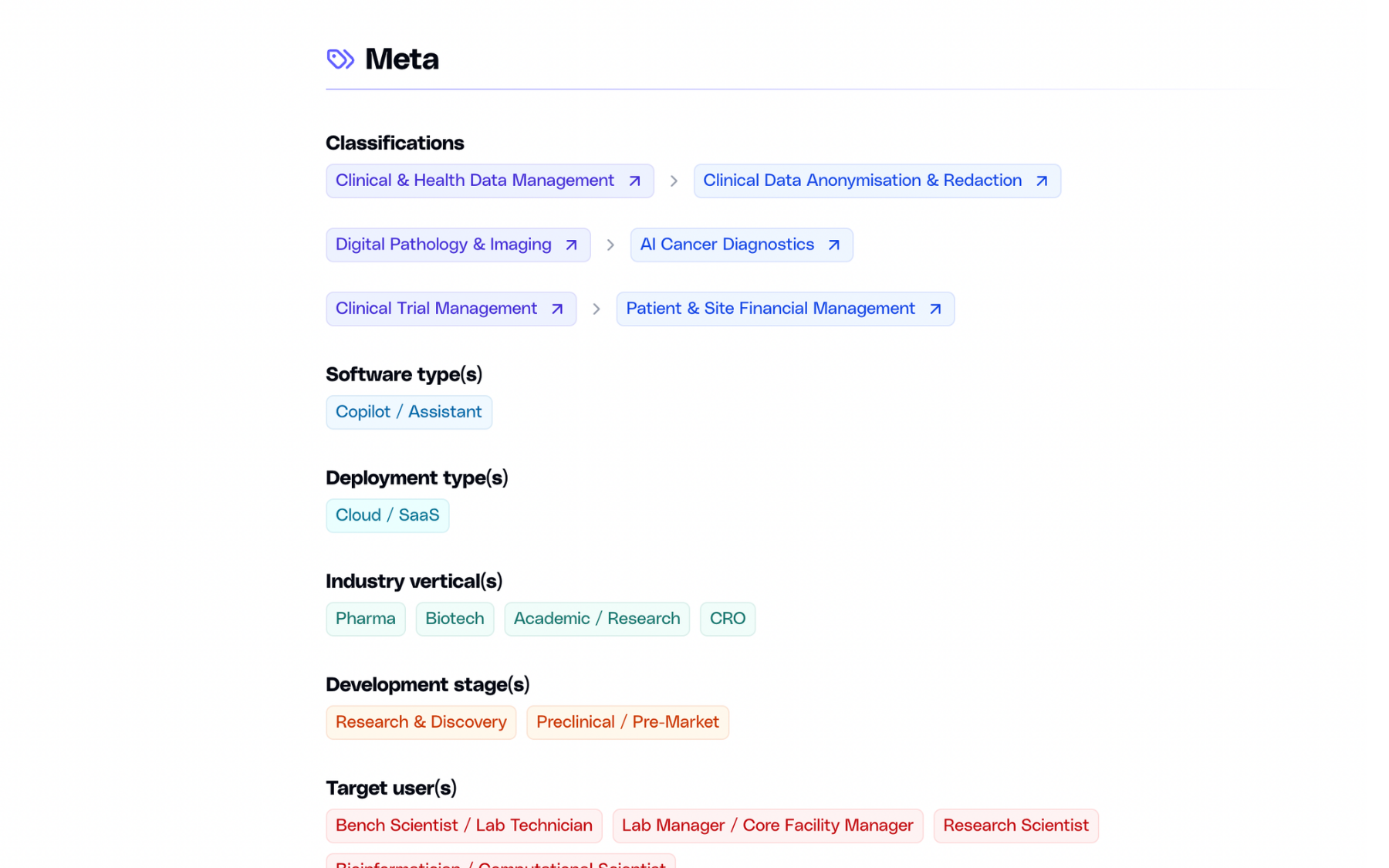
Classification & search
List your software under up to three domains and subdomains, and appear in search as a company, not only as a product.
Evidence
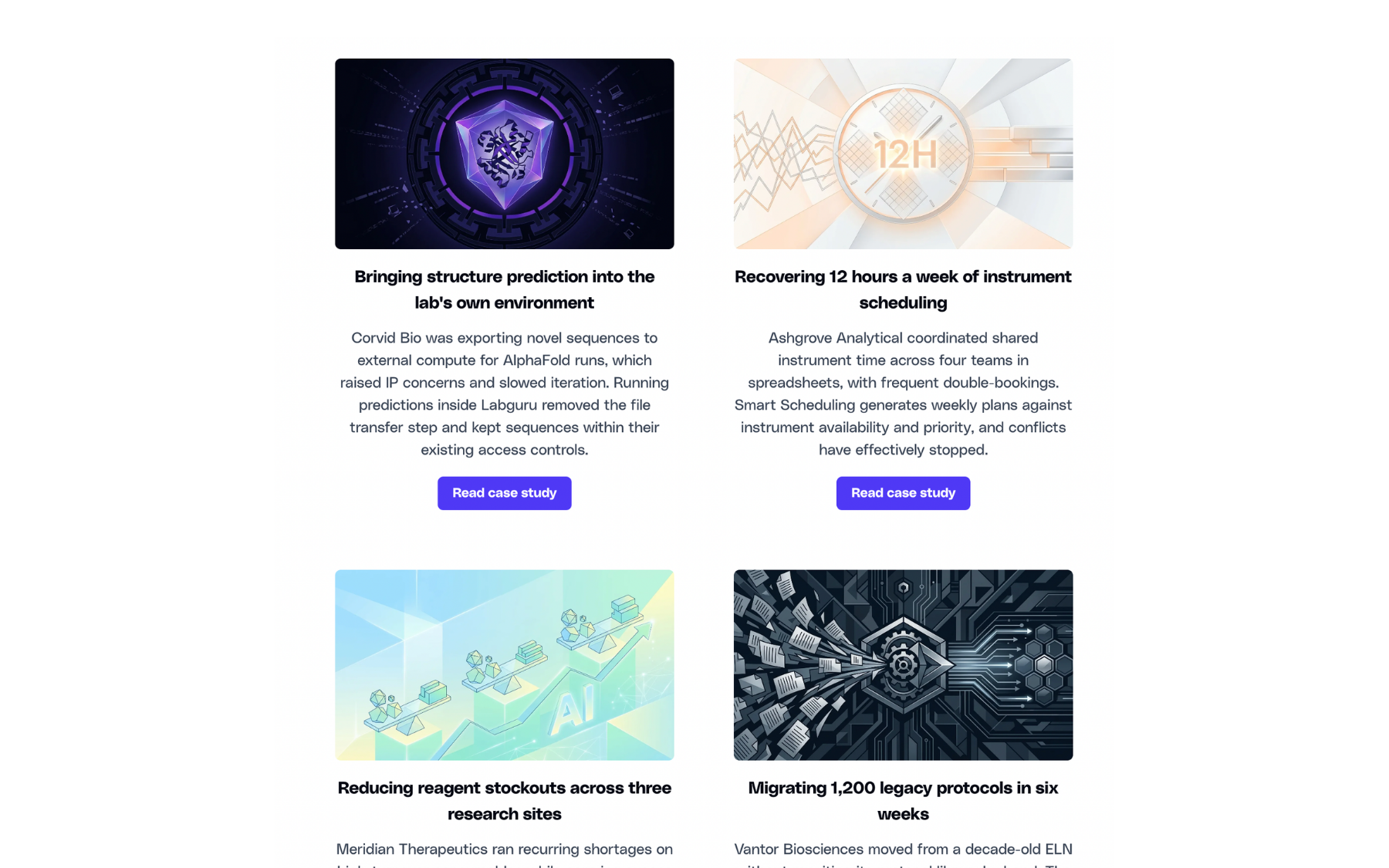
Case studies
Published outcomes with images and links to the full write-up. Add as many as you need, edit them anytime.
Product
Image gallery
Screenshots of the actual interface, in a gallery visitors can open full-size.

Next step
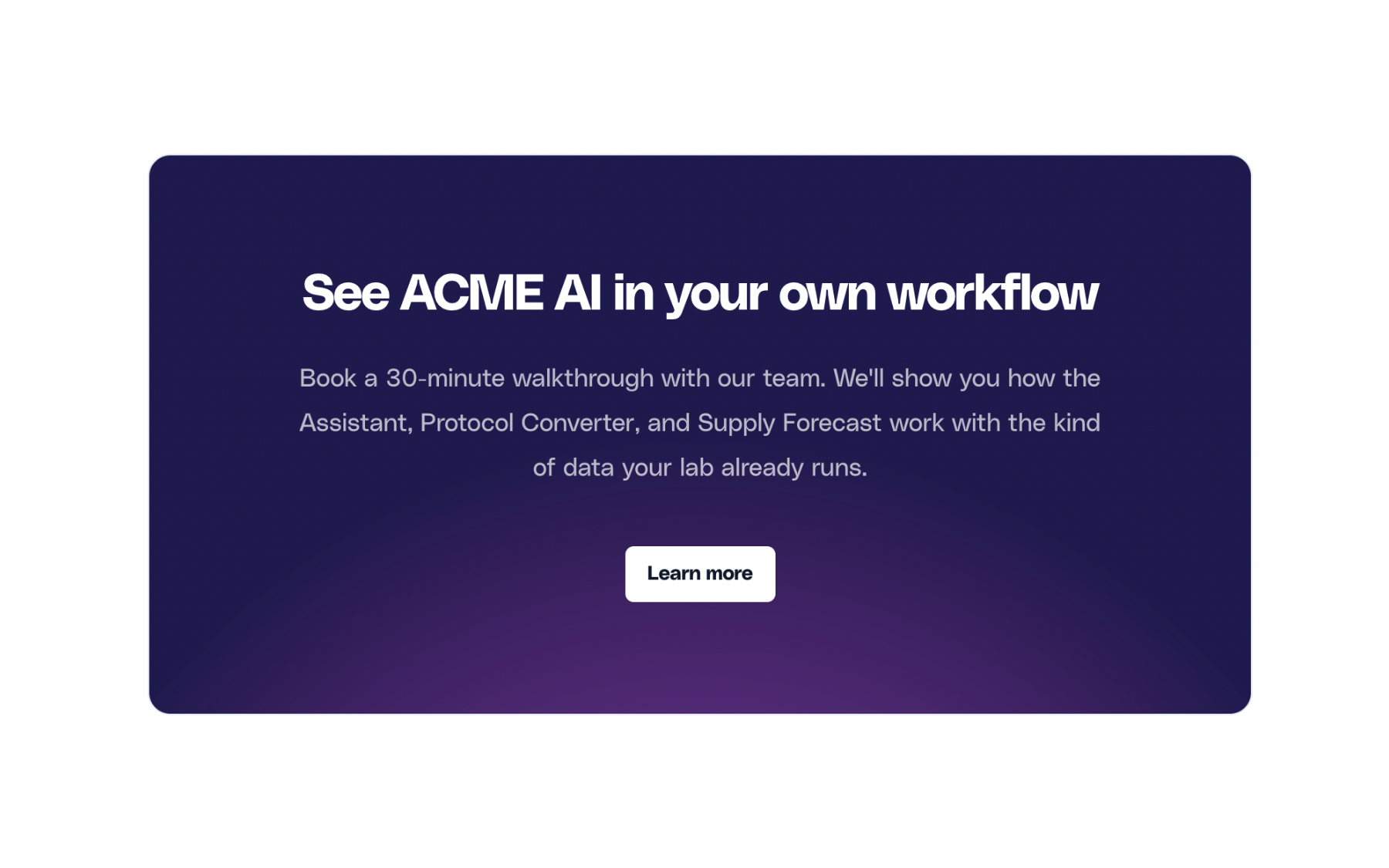
Call-to-action
A dedicated block that sends visitors where you want them — a demo, a trial, or a contact form.
And more:
Basic listing vs premium profile
There are no tiers. Everything below is included with a premium profile, across your company page and every software page attached to it.
Basic
Premium
Basic
Premium
Basic
Premium
Basic
Premium
Basic
Premium
Basic
Premium
Basic
Premium
Basic
Premium
Basic
Premium
Basic
Premium
Basic
Premium
Basic
Premium
Basic
Premium
Basic
Premium
Basic
Premium
Basic
Premium
Three steps away.
01
You reach out
Fill in the form below with a few details about your company.
02
We talk
A short call or an email thread, whichever you prefer. We answer your questions and agree on the details.
03
You get access
We set up your login. From there you can edit everything and publish when you are ready.
Ready to claim the Open Systems Pharmacology profile?
Send a short note and we will get back to you.